



Across Ontario, the arts and culture sector is facing an unprecedented spatial crisis. Escalating real estate costs, inflation, and over-capacity municipal and non-profit facilities have made finding affordable, permanent workspace an overwhelming barrier to creative practice.
To address this urgent challenge, ArtsBuild Ontario (ABO), in partnership with the Canada Cultural Spaces Fund, Why Not Theatre, Mass Culture, the City of Waterloo, and Lowland Properties, embarked on a groundbreaking two-year Meanwhile Space Pilot Project in the Waterloo Region (October 1, 2024 – March 31, 2026).
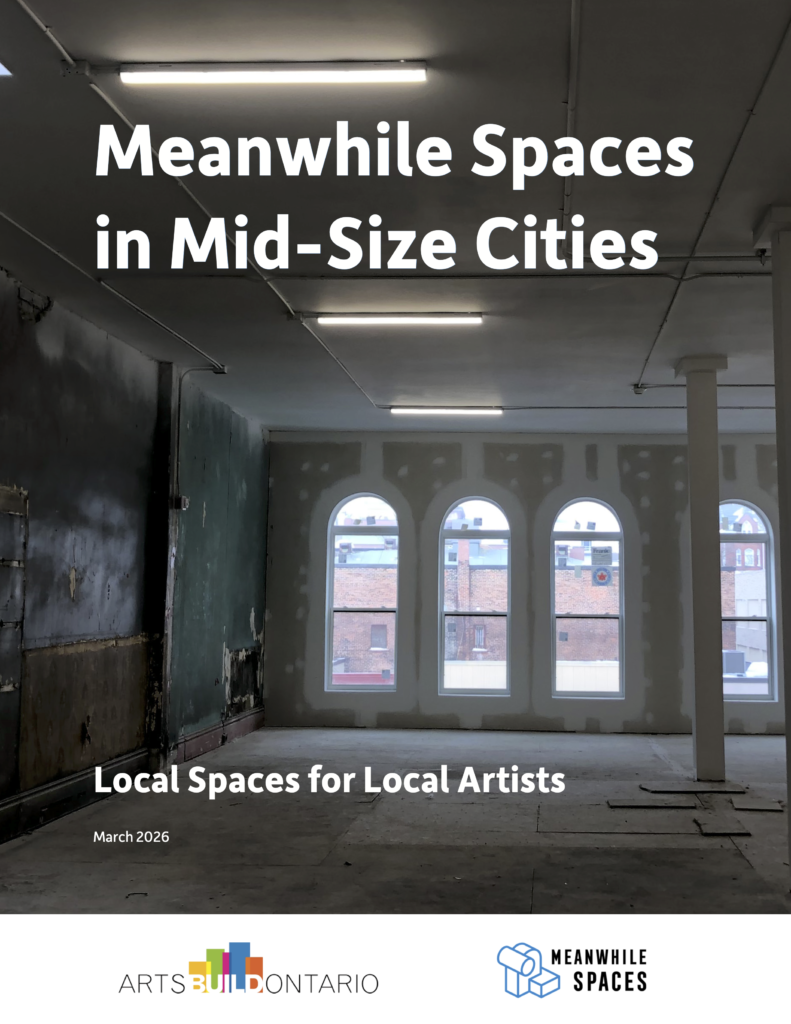
The “meanwhile space” model offers a tactical solution by transforming vacant commercial, municipal, or underutilized properties into temporary, low-to-no-cost workspaces for artists under flexible leasing structures. While previously proven in major urban hubs like Toronto, ABO’s pilot specifically tested the feasibility, scalability, and operational realities of this model within mid-sized municipalities.
Today, we are thrilled to release our comprehensive Summary Report and actionable Toolkit, charting a clear roadmap for space activation across Ontario.
Key Insights & Sector Takeaways from the Report:
- Mid-Sized Municipal Adaptation: Integrating sector data and regional research from Why Not Theatre, the report sheds light on how spatial and transit needs differ in mid-sized cities compared to major metropolitan hubs.
- The “Evolution” Framework: Moving past the narrative of simple temporary “transitions,” the report introduces an “Evolution” model demonstrating how short-term pop-up installations can serve as long-term catalysts for permanent cultural infrastructure and artist retention.
- Navigating Zoning and Adaptive Reuse: The report provides crucial technical clarity on municipal zoning models (such as Waterloo’s E3 zoning) and addresses the distinct logistical nuances of adaptive reuse–highlighting how repurposing former community centers presents entirely different accessibility, AODA compliance, and building safety dynamics than heavy industrial properties.
- Balancing Predictability & Financial Sustainability: A comprehensive cost-benefit analysis breaks down the true cost of managing meanwhile spaces, examining “hard property overheads” (operating expenses and realty taxes) relative to artist utilization, and evaluating sustainable future fee models once free pilot periods conclude.
- Multi-Sector Perspectives: Vital reflections from municipal space partners (the City of Waterloo) and private property owners (Lowland Properties) provide a 360-degree blueprint on what makes external stakeholders comfortable with executing flexible meanwhile leases.
What’s inside the Toolkit?
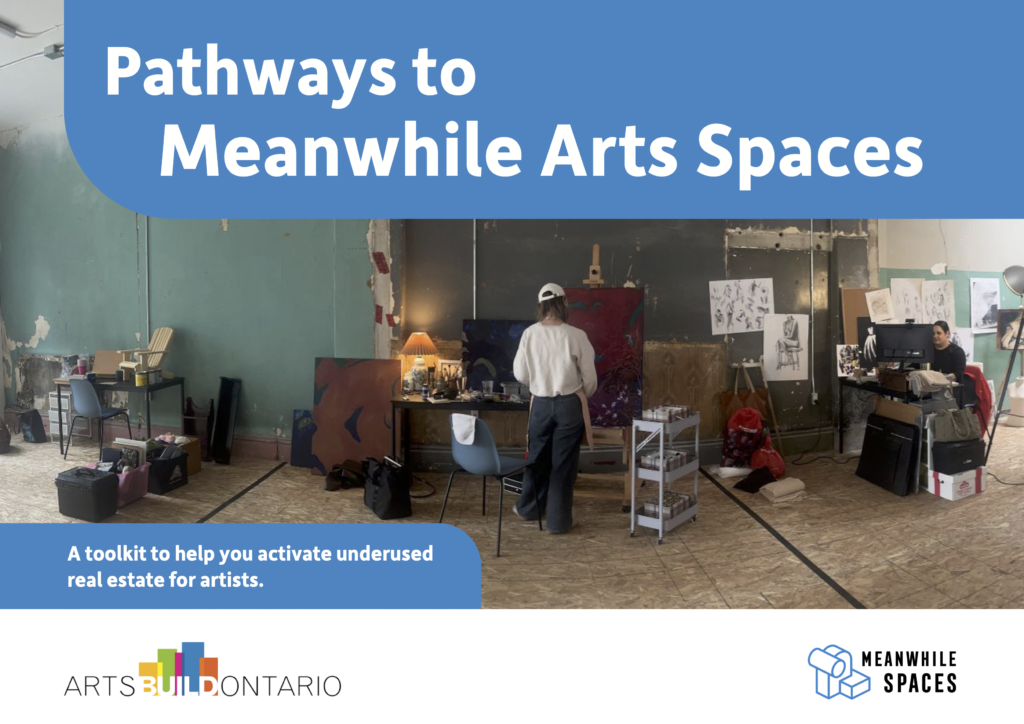
The accompanying Meanwhile Spaces Toolkit serves as a highly practical, step-by-step operational guide for arts administrators, planners, and landowners alike. Utilizing a simplified “pathway motif” and an extensive “Learning from Doing” section, it walks you through:
- Template developer and municipal agreements (balancing flexible 30-day exit clauses with artist predictability).
- Space accessibility, equity considerations, and site vetting scorecards.
- Strategic insights into property liability insurance and cohort-based tenant onboarding.
Whether you are a municipal planner looking to revitalize a decommissioned asset, a developer seeking social impact for a vacant storefront, or an artist looking to build local spatial capacity, these resources are designed for you.
Download and Read the Full Report Here
Access the Practical Toolkit Here
